




Original Article Source : https://www.theworldfolio.com/interviews/jntc-advances-glass-processing-for-the-next-generation-of-ai-and-automotive-industries/7217/

ANDREW N.H CHO, CEO OF JNTC
Over the past several years, global supply-chain realignment has become a major theme. The United States has pursued protectionist measures that encourage companies to diversify away from Chinese suppliers. As a result, Korean manufacturers have increasingly replaced Chinese vendors, strengthening cooperation with Western companies. From your perspective, does this shift represent further opportunities for Korean SMEs going forward?
Speaking from JNTC’s position, this shift represents one of the most significant opportunities in decades. China has become extremely strong in equipment, tooling, and mass-scale manufacturing, achieving high quality at highly competitive prices. Competing directly with that level of scale is extremely difficult.
However, the U.S. strategy of securing technology supply chains among “trusted partners” creates a strategic opening for Korean SMEs. Many Korean SMEs, including JNTC, have developed advanced technology and manufacturing know-how through long-term collaboration with major domestic conglomerates such as Samsung, SK, and Hyundai. This foundation is strong. So the current geopolitical environment allows companies like ours to position ourselves as reliable and high-value partners in global supply chains.
To illustrate: Ten years ago, Korea had eleven companies specializing in mobile and automotive glass processing. Today, only one remains. Price competition from China eliminated the others. Even Samsung now buys much of its mobile cover glass from China. Meanwhile, Huawei selects JNTC for its premium 3D-shaped camera cover glass because we have the technology others cannot replicate. The situation is ironic, but it demonstrates that differentiated technology, not price, determines long-term survival.
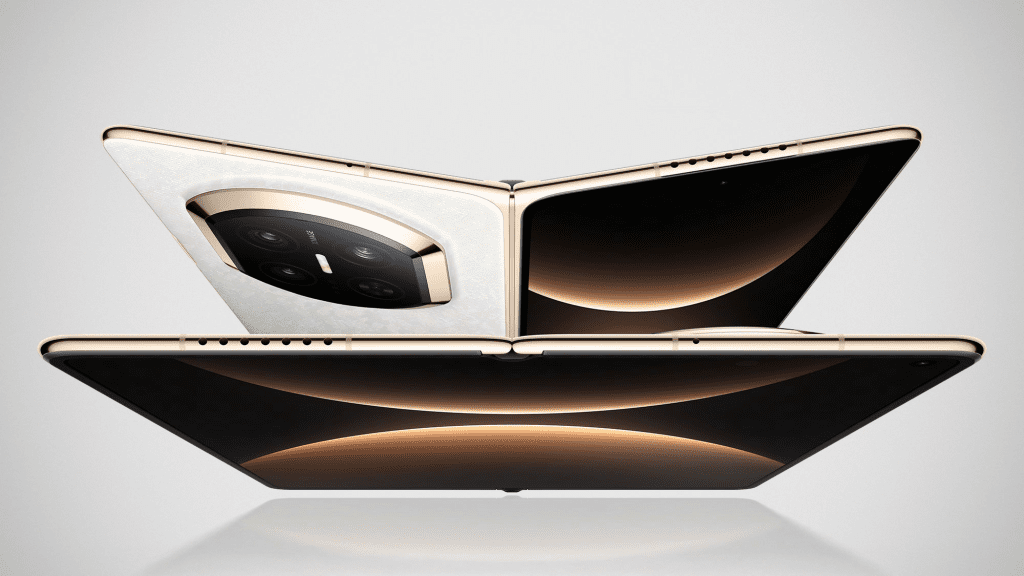
Product for smartphones
How did you overcome the challenge of competing in a market where Chinese companies dominate on price, yet still supply a major Chinese brand?
The key is our proprietary 3D-bending and shaping technology. Huawei’s premium phone series such as the Mate X, Mate and Pura series requires uniquely curved and structurally stable cover glass. Most companies can only achieve full bending, which distorts optical clarity. Our process produces a precise, controlled 3D curvature with minimal distortion. This capability is not easily replicated, so we retain competitive strength even against companies with lower pricing.
What have been the primary challenges and key success factors when working with non-Korean conglomerates, compared to working with domestic ones?
The biggest challenge is always price competition. However, our advantage is vertical integration. JNTC has 40 years in equipment engineering, 30 years glass processing for IT display products, and 25 years in metallization technology. Our chairman is an engineer, which means the company culture prioritizes innovation, custom development, and problem-solving. We do not sell standardized glass; we design to the client’s exact concept and function requirements. This is essential when working with global clients.
As an example, one of our clients is Mercedes-Benz. The EQ series features a 1.2-meter ultra-wide display spanning from the driver to the passenger side. This glass requires multiple bending axes, complex optical tolerance control, and high durability. JNTC was the first to successfully develop and commercialize this type of cover glass. This is why we are now also working with Porsche and Bentley on similar advanced interior display glass projects.
